
All was well in the paradise of the internet, till the hot summer of June of 2013, everybody was happily texting, making memes and enjoying the pre-iniquitous bomb that was yet to be dropped! It was when the mass surveillance scheme carried out by the US which was unveiled by Edward Snowden, it was realized, that this daily flow of data is a live wire waiting to be exploited and the US has already been using it. Thus, began the journey of a safer and better, along with incoherent internet all around the globe. India is on the verge of data localization, let’s have a look at what this entire conversation is all about.

By João Batista Neto – Data types – pt br.svg, CC BY 3.0, Link
What is DATA?
Data is merely a raw form of information, it may be along with the qualitative and quantitative parameters. The importance of data lies in the fact that, it can be used to generate analysis and can predict trends effectively and which each step of refinement, can lead to higher understanding, which ultimately leads to Artificial Intelligence.
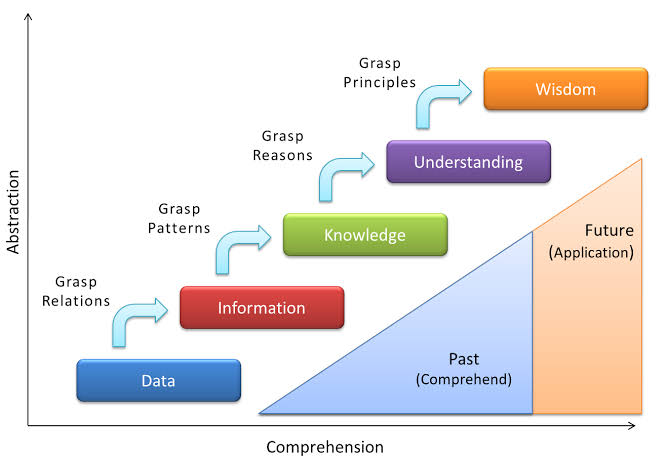
Data, when refined, illustrated and cross-referenced against various parameters, create a pattern leading to information, and when this information is further refined to understand these patterns into further depth is knowledge which in turn is used to understand the underlying principles then they create wisdom. To understand this better, let’s take an example, if there is a room full of people, I ask each one of them, to write their favorite color, it will be a bunch of name with colors and essentially of no use, but when I refine and cross-reference it against age, gender or any other preferences, then I can get results like “middle-aged men of age 30-40, prefer dark blue” or “women from 20-30 age like black” these show tendencies and now when I reference this against their area or interests then we get trends like “female teachers of age 20-30 like the color beige”. These trends can be used to study markets, consumer needs and forecast the next winner of the IPL. So, data is a great economic and social opportunity waiting to exploited.

Hence, when the data was found to be used for mass surveillance, creating an uproar, leading to strict action in all of the countries and associations, because this was gross violation of human rights, along with this, in India came the ADHAR debate, leading to questions related to privacy, data localization (the report by Srikrishna committee) and some of the most glass ceiling shattering judgments by the highest court of law in India.
What is Data Localisation?
Data Localisation is the act of storing data, on any device that is physically present within the boundaries of a specific country, where the data was essentially generated. The mere definition of this, seems a little retrospective, as this field is moving in leaps and bounds, such regulations can limit the development, But on the contrary, it tries to bring the data which escapes from us, under the rule of law.
Why Cyberspace should be under the Rule of Law?
What is the Rule of Law?
Rule of law is a term that is heard quite often, especially in the statements of the Supreme Court and from the lawyers, but it hard to define. Rule of law is vital to democracy, and it means that law is supreme, that the nation is not governed by only one person, but by the collective efforts of the citizens. It is a derivative of the concept of SOCIAL CONTRACT. (It is explained completely by the American Bar Association )
The Need For the Cyberspace to be in the Rule of Law :
Internet and data are the new centerpieces to social and economic institutions, and for them to be outside the ambit of the Rule of law, then it endangers the weaker section or less aware (in this situation) and also it guarantees various protections which in turn ensure justice. In a digital society, as data is mirrored and its stake in coordinating the social, economic and political aspects seems to be in an ever-increasing manner, it needs to be under the Rule of Law more than ever!
The intriguing part of this is the fact that Data to be under the law, will require the ability to access it and act upon it, hence making data localization vital for our protection, because actors over which Indian law has no reach over, should not be able to use our data to harm us through surveillance or informational warfare, which effectively our elections and other democratic pillars, hence our data should be protected from such foreign entities and it can do so if data localization takes place or data stays in borders. Now, the elephant in the room, what about the breach of privacy by the state agencies themselves; such privacy concerns can only be countered by changing the IT infrastructure and by strengthening the protective and corrective powers of the state inclusive of the judiciary and the data protection institutions (Srikrishna committee’s recommendation 2018). Data localization doesn’t mean infringement of our rights or privacy, it will give state the responsibility to protect our data, and to be honest, no place is bulletproof, and in this world so is our data, but government has to realize that it has to put up good efforts and have a speedy grievance redressal and compensatory system in case of the breaches.
DATA IS THE NEW OIL
Data and digital intelligence derived from it are a globally recognized economic asset of the 0 and 1 society. The ownership, control and access of data decide who gets to rule of economy, as given above, my example under “What is data?” shows the prowess of the data and the knowledge it gives birth to. The trend of countries proposing data sharing regimes and data infrastructures are focussing especially on data taken from the public spaces and data that are generated by users on digital platforms, a category called COMMUNITY DATA. Community data doesn’t imply sensitive details, it implies trends or more specifically, what people search more, recent searches like google do to ease the search.
These huge companies or this private data can be used as an input for policymaking and governance. It will make policies inclusive, and cater to larger demography, and some countries have even made, sharing “COMMUNITY DATA” mandatory, because it is essentially public interest data.
So, if the government wants a part in this data flow, it cannot achieve all these basic objectives, if data can easily escape to any part of the world, beyond its jurisdiction. More and more countries are trying to exploit the nature of the data by legislating on storage, processing and cross border flow of data, without compromising with the sanctity of the ‘Rule Of Law’ existing in the country.

The commercial aspect of data localization stands that if it pushes through, then the demand for cloud services will skyrocket, along with that AI(artificial intelligence ) functions, many companies like Paytm are preparing themselves, with already venturing into the artificial intelligence cloud computing platform for India eyeing the new developers, startups and enterprises, not only Paytm also Oracle sees large opportunities and (as told to Economic times) it believes that it will give an equal ground to mid-sized companies to startups. Cloud services remove the burden of the market analysis and processing, it allows focusing on the core.
It is reasonable to assume that in data-oriented societies (emerging all over), data becomes quintessential, consequently, unchecked flow is not rational by any means and if data localization makes us feel that government is overtaking our lives, then we must also know that otherwise, this data by default belongs to the large private organizations which could sell our data in a heartbeat with no accountability, but even if government even thinks of that, especially Indian government, it will be through lawful means of checks and balances and it will have to prove its stand in a court. Not only selling of data these private organizations can form a caucus with any tyrant and they might work in a reinforcing manner, to suppress and destroy democratic means, hence it is better to bring it to light and put governments and such organizations to public forums in our own country, to facilitate better policy-making and work for the people instead!
What lies ahead for India, in terms of data is promising, but the need to strengthen the IT infrastructure with physical as well as legal needs is important, and only that, data localization is an expensive path but with worthy fruits. If data is the new oil in times to come, then India needs more refineries and not only wells!
 The Distorted Mind
